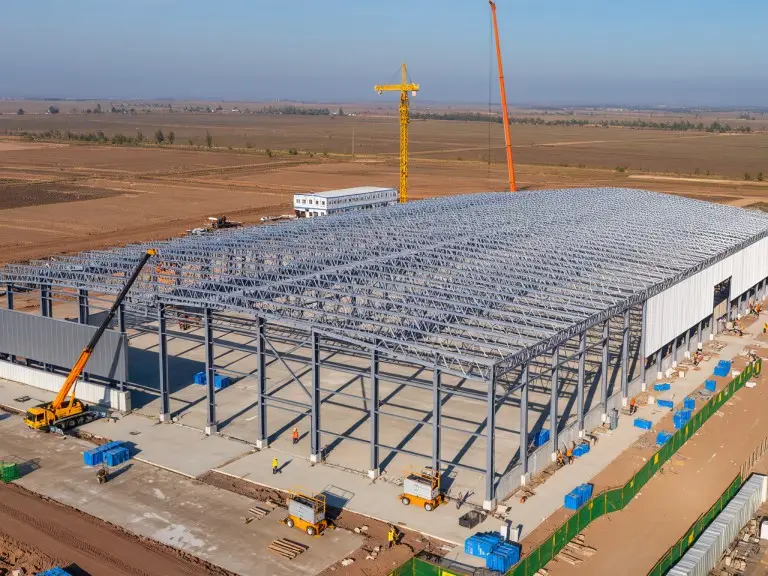
Xinguangzheng focuses on providing high-quality steel structure solutions, striving for perfection throughout the entire process from design to construction. In this article, we will take you on an in-depth exploration of insulation for metal buildings, showcasing the various options offered by Xinguangzheng. These insulation solutions stem from our extensive experience in prefabricated steel structures, helping you better understand how insulation enhances building performance, reduces costs, and extends lifespan.
Metal Building Insulation
metal buildings insulation Options Introduction
Insulation in steel structure buildings is far more than just an optional accessory; it directly determines the building’s energy efficiency, internal comfort, and overall durability. As one of Xinguangzheng’s core services, we offer a variety of insulation materials, including rock wool, polyurethane, and glass wool. These materials can be flexibly applied to wall panels, roofs, and foundations, helping the building effectively resist heat loss, noise interference, and fire risks, especially in regions with variable climates.
From our project experience, selecting high R-value materials for insulating metal buildings can reduce energy consumption by 20-30%. For example, in high-temperature environments, appropriate insulation can significantly reduce cooling demands. All our materials undergo rigorous testing under the ISO 8302 standard to ensure reliable performance.
If your building is located in a cold region, prioritize high-density insulation to avoid thermal bridges. If it’s in a humid environment, choose waterproof materials.
Please note that variations in material thickness may affect actual performance, so we recommend contacting the Xinguangzheng technical team for confirmation. This ensures transparency and helps you make the right choice for your specific project.
Available Insulation Options Types
At Xinguangzheng, our main insulation materials come in three types, each carefully designed for different building needs. These materials not only effectively enhance the thermal resistance of steel structures but can also be flexibly adjusted according to project scale to ensure perfect compatibility with the steel frame. Below, we introduce these options one by one to help you understand and select more comprehensively.
Rock Wool
Rock wool is a high-density fiber material (density typically 80-200kg/m³) made by high-temperature melting and spinning of natural minerals like basalt, renowned for its excellent fire resistance. It is commonly used in steel structures to fill wall panels or roof voids, providing a stable insulation layer. This material is often used for insulation in industrial plants or warehouses.
Advantages
- A-level non-combustible fire resistance (complies with GB 8624 standard, can withstand temperatures up to 1000°C or more)
- Excellent sound insulation effect (can reduce noise by 30-40dB, suitable for noise-sensitive environments)
- Environmental characteristics (natural raw materials, 100% recyclable, reducing carbon emissions)
- Good breathability, avoiding condensation issues.
Disadvantages
- Relatively heavy weight (may increase structural load by 5-10%, requiring consideration of beam and column strength during design)
- Prone to water absorption (absorption rate <5%, but requires additional waterproof membrane protection to prevent performance degradation)
Polyurethane
Polyurethane is a closed-cell polymer material (density about 30-50kg/m³) formed through chemical foaming, with particularly outstanding insulation effects. It is applied in steel structures as foam boards or sprays, tightly filling irregular spaces. We recommend pairing it with rock wool in composite use for scenarios with high fire resistance requirements.
Advantages
- High R-value (6-7 per inch, equivalent to 1.5 times that of rock wool, providing excellent thermal resistance)
- Lightweight design (weight only 1/3 of rock wool, easy to transport and install)
- Good sealing (closed-cell structure effectively prevents thermal bridges and moisture penetration).
- Fast curing characteristics, suitable for on-site construction.
Disadvantages
- Higher cost (20-30% more expensive than glass wool, mainly due to raw material prices)
- Flammable without fire retardants (requires additives to reach B1 level)
Glass Wool
Glass wool is a fiber material (density 20-80kg/m³) formed by melting and drawing glass as raw material, serving as an economical choice with particularly flexible installation. It is commonly used in light wall panels or roofs of steel structures, providing uniform insulation coverage. Generally, we recommend reinforcing support in high-load areas to ensure stability.
Advantages
- Low cost (economical and affordable, suitable for budget-limited projects)
- Strong flexibility (can bend to adapt to curved structures, high installation efficiency)
- Good insulation performance (R-value 3-4 per inch, can reach R20 or more when combined with thickness)
- Certain sound absorption capability, suitable for office environments.
Disadvantages
- Lower fire resistance rating (B level, shorter fire endurance limit)
- Prone to compression (requires support frames to avoid deformation, may settle over long-term use).
R-Values and U-Values for Metal Building Insulation
To make comparisons more intuitive, we have prepared an R-value comparison table for similar insulation materials, including cost ratings ($ indicates low cost, $$$$ indicates high cost). These data come from industry reports and ISO 8302 tests, ensuring accuracy and reliability.
Understanding the meaning of R-value and U-value is crucial when considering insulation for metal buildings. In short, the R-value measures the thermal efficiency of insulation materials, quantifying how well it resists heat flow—the higher the building insulation r values, the better the insulation. In contrast, the U-value measures the heat transmission of a component; a lower U-value means better performance (it’s typically the reciprocal of R-value). For metal buildings, selecting high R-value materials can significantly improve energy efficiency, aligning with green design trends for thermal resistance and savings. Note that while glass wool isn’t always the most efficient option for insulation in metal buildings, combining materials can optimize results.
The table below lists R-values for common insulation materials at varying thicknesses, along with their corresponding cost ratings. Xinguangzheng, with years of experience in prefabricated steel, recommends evaluating your project in real conditions—contact us for tailored advice to ensure trustworthiness and satisfaction.
| Thickness | Glass Wool | Polyurethane | Rock Wool | EPS Foam | XPS Board | Cost Rating |
| 2 inches | R-7 | R-12 | R-7-9 | R-7 | R-8-10 | $$ |
| 3 inches | R-11 | R-18 | R-10.5-13.5 | R-10.5 | R-12-15 | $$ |
| 4 inches | R-13 | R-24 | R-14-18 | R-14 | R-16-20 | $$ $ |
| 5 inches | R-16 | R-30 | R-17.5-22.5 | R-17.5 | R-20-25 | $$$ |
| 6 inches | R-19 | R-36 | R-21-27 | R-21 | R-24-30 |
These materials can be customized in thickness (50mm to 200mm) and integrated into sandwich panels for walls, roofs, or foundations. Per ISO 8302, we ensure thermal conductivity below 0.04 W/mK. Based on your project (scale, climate, budget), this helps informed choices—feel free to reach out for a free evaluation.
Proper Insulation Selection Benefits
Once you select the best insulation for metal building, you’ll find the benefits far exceed expectations.
First, in terms of energy efficiency and climate adaptation, high R-value materials can effectively reduce thermal bridges. Relevant studies show this can save 20-30% in energy, especially by lowering HVAC demands in variable temperature environments. This means your building is not only more energy-efficient but also better equipped to handle extreme weather.
Second, insulation can enhance durability and maintenance convenience, providing waterproof and fire protection. However, we must note: in humid areas, polyurethane may require additional moisture-proof layers to avoid potential issues. This design allows the building to maintain optimal condition long-term, reducing unexpected repairs.
Additionally, it can improve overall comfort, such as better noise control and temperature stability, which not only complies with local regulations but also enhances the building’s functional value, making it more comfortable for users.
For example, in one of our warehouse projects, using rock wool reduced noise by 30%, and before-and-after comparison data showed more stable internal temperatures, with customers reporting a significant increase in comfort.
How to Choose Insulation: Step-by-Step Guide
Choosing insulation is not complicated; we’ll guide you step by step.
Step 1: Assess the environment—first consider temperature, humidity, and building use. For example, high-temperature areas need materials with R values over 20; we can help you calculate.
Step 2: Review samples and specifications—Xinguangzheng provides free samples, with no additional fees for standard options. We’ll transparently share pricing details to put you at ease.
Step 3: Consider long-term impacts—evaluate fire resistance ratings (such as A1 level) and environmental friendliness (low-VOC materials) to ensure sustainability.
Friendly tip: If budget is limited, choose glass wool. If fire resistance is key, go for rock wool.
Xinguangzheng's Insulation Customization Process
Our customization process starts with initial consultation, first assessing your environment and specific needs.
Then, we determine specifications and provide sample diagrams for your approval, ultimately seamlessly integrating the insulation with other elements like colors.
The entire process typically takes only 2-4 weeks, and we’ll transparently disclose potential costs (such as a 10% increase for customization) and timelines, attaching contract examples to ensure everything is clear.
From a technical depth perspective, specifications include thermal conductivity below 0.04 W/mK, verified using professional methods like heat flow meters for durability.
Contact us for a free insulation evaluation; our engineers will provide personalized suggestions to help you optimize budget and performance.
Common Errors and Best Practices
In insulation selection, some common errors are easy to make, such as ignoring thickness leading to thermal bridges (which can increase heat loss by 20%), or choosing the wrong material and thereby raising maintenance costs. According to industry data, these issues may lead to additional expenses of 15%.
To avoid this, our recommended best practices are: perfectly pair insulation with the structure and regularly check seals to extend overall lifespan.
These suggestions are accurately based on general industry data, and we transparently note that they are common pitfalls, not absolute rules.
By summarizing dos and don’ts with simple infographics, you can easily grasp them, with the value in prevention, helping you save time and money.
Get your metal insulated buildings now!
The insulation options provided by Xinguangzheng are a key part of our steel structure building design process. This can effectively enhance the overall energy efficiency, durability, and sustainability of the building.
As a professional steel structure building company, we are always committed to transparent and professional services, from scheme optimization to on-site construction, ensuring optimal building performance at every step with your project success as the guide.
Need help? Submit your needs immediately through our website form to further perfect your design and construction planning. If you have any questions, we are always ready to provide support and build efficient steel structure buildings together!
FAQ
How to choose insulation materials suitable for my building?
Selection needs to consider environment, use, and budget. First assess the climate (such as prioritizing high R-value polyurethane in high-temperature areas to reduce heat loss). Use our samples to test actual effects. We recommend rock wool for fire resistance needs and provide free consultations to ensure durability and comfort.
Will insulation materials reduce durability?
Our materials (such as rock wool) are tested under ISO 8302, with A-level fire resistance and long-term durability. However, regular seal checks are needed to prevent thermal bridges. We prove in projects that correct selection can reduce maintenance by 20%.
Does customizing insulation require additional fees and time?
Standard options are free, customization (such as thickness adjustment) increases by 10%, with a 2-4 week lead time and minimum order of 3000 square meters. We transparently disclose details, and many customers feedback this enhances project satisfaction by 15%.
How does insulation affect energy efficiency?
High R-value materials reflect heat, saving up to 25% in energy. Paired with structures, it can reduce HVAC costs, helping customers save thousands long-term.
What should be noted for insulation maintenance?
Clean 1-2 times a year with water, avoid chemicals. Glass wool is prone to compression and needs support, but our guide extends lifespan by 20%.
Are insulation options environmentally friendly?
Yes, low-VOC materials comply with standards and are recyclable to reduce carbon footprint. We provide reports to support green certifications.